
WhatsApp pricing changes: what you need to know
How per-conversation pricing actually works, where the free window applies, and how to plan a budget that does not surprise you.
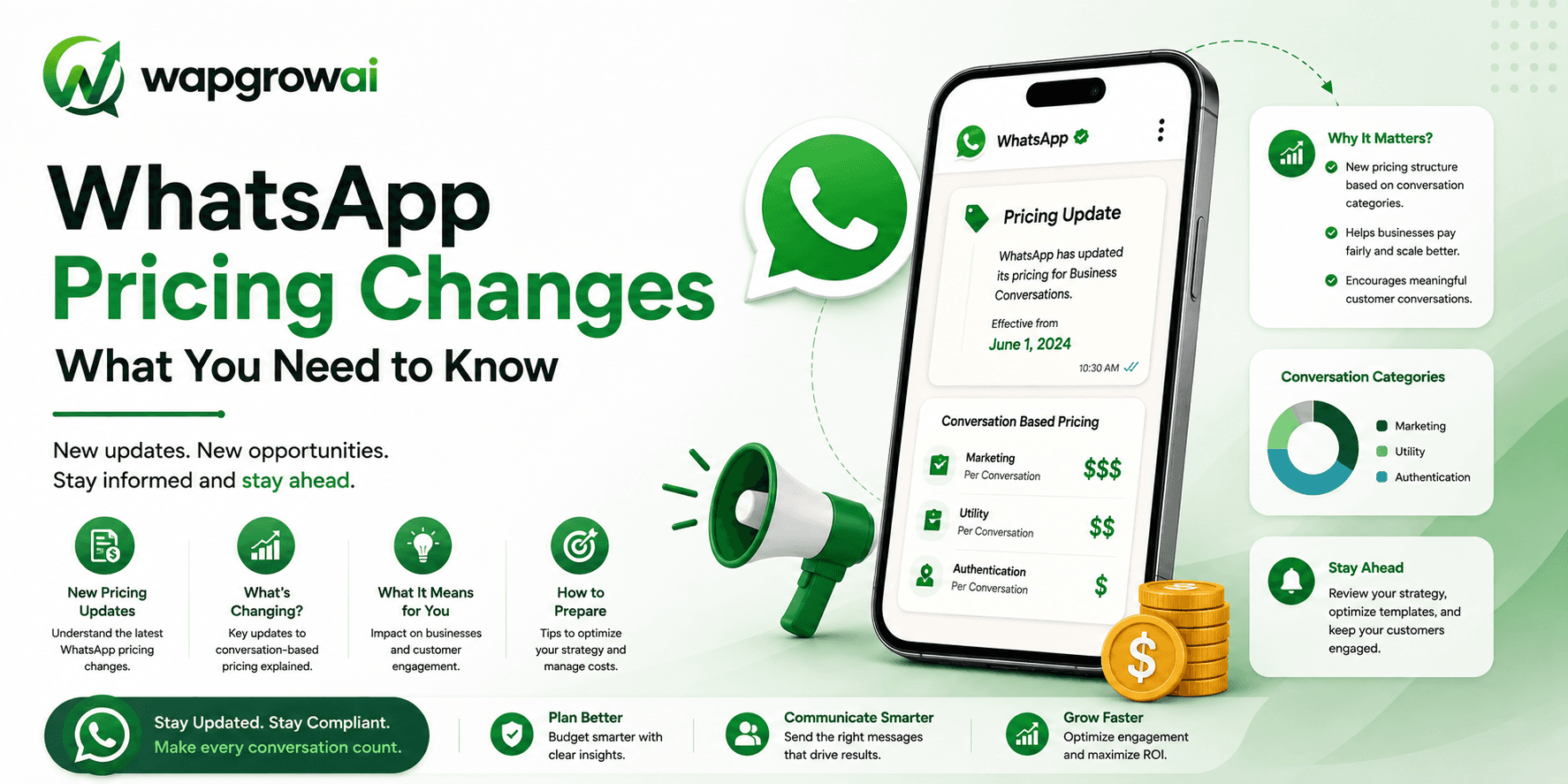
WhatsApp pricing confuses people for a specific reason: it does not price the thing you think you are buying. You are not paying per message. You are paying for a window of time during which messages are free, and the price of opening that window depends on why you opened it.
Once that clicks, the whole model becomes predictable — and, more usefully, optimisable. Teams that understand it routinely cut their platform bill substantially without sending fewer messages, simply by changing who opens the conversation and when.
The unit is a conversation, not a message
A conversation is a 24-hour window between your business and one customer. It opens when a message is delivered, and for the next twenty-four hours, every message either side sends inside that window is included. One message or fifty, the cost is the same.
This is the opposite of SMS, and it inverts the instincts most marketing teams have. On SMS, brevity saves money. On WhatsApp, brevity saves nothing — and the reflex to compress a conversation into one message often makes the experience worse for no financial gain at all.
The categories, and why they are priced differently
Conversations are priced by category, and the categories exist to make interruption expensive and helpfulness cheap.
- Marketing: you contacted the customer with a promotion. The most expensive category, deliberately.
- Utility: you contacted the customer about a transaction they are already part of — an order, an appointment, an account.
- Authentication: one-time passcodes and verification.
- Service: the customer contacted you first. Historically the cheapest, and in many markets now free.
The price gap between marketing and service is large, and it is the single most important fact in your budget. Meta is telling you, through pricing, that a conversation the customer started is worth encouraging and a conversation you started is worth rationing.
The cheapest conversation is always the one the customer opened. Design your acquisition around that and the bill takes care of itself.
The free entry points, which most teams underuse
There are two doorways into a conversation that Meta does not charge you to walk through, and they exist precisely because Meta wants businesses to be reachable rather than intrusive.
Click-to-WhatsApp ads
When a customer taps an ad that opens a WhatsApp chat, the resulting conversation window is free for a period. You are already paying Meta for the ad click, so they do not charge you twice. This makes click-to-WhatsApp ads dramatically cheaper as a lead channel than the equivalent broadcast, and it is why the economics of CTWA campaigns look so different from cold outreach.
The chat button on your own properties
A WhatsApp link or QR code on your site, your packaging, your receipt, or your storefront opens a service conversation — the customer initiated it. Businesses spend fortunes on marketing templates to reach people who would have messaged them for free if there had been a visible way to do it.
Where the money actually leaks
In the accounts we have audited, overspend almost never comes from sending too many messages. It comes from opening too many windows.
- Splitting one thought across several templates sent hours apart, each opening a fresh billable conversation instead of one.
- Sending a marketing template to a customer who is already inside an open service window — where the message would have been free.
- Re-broadcasting to non-responders without segmenting out the people who have never once engaged.
- Using a marketing template for something that is genuinely a utility message, and paying the higher rate for no reason.
That third one deserves a hard look. If a contact has received six broadcasts and replied to none, the seventh is not going to work either. You are paying to lower your own quality rating.
Building a budget that holds
Forecast conversations, not messages. The arithmetic is straightforward once you have the right unit.
- Estimate marketing conversations: how many people you intend to proactively promote to, per month.
- Estimate utility conversations: order updates, reminders, alerts. This scales with orders, not with marketing ambition.
- Estimate service conversations: inbound volume, driven by your traffic and how visible your chat entry points are.
- Multiply each by the rate for your market, and keep the three lines separate on the report.
Keeping them separate is the point. A rising service line is usually good news — more customers are reaching you. A rising marketing line with a flat conversion rate is a spending problem wearing a growth costume.
Cutting the bill without cutting the reach
- Shift acquisition toward click-to-WhatsApp ads and on-site chat entry points, where the window opens free.
- Consolidate: one well-designed template that carries the whole message beats three that each open a window.
- Use the open window. Once a customer replies, everything for the next twenty-four hours is included — that is where the follow-up, the upsell, and the resolution should happen.
- Prune the list. Contacts who never engage cost money every time you touch them and lower deliverability for everyone else.
- Categorise honestly. Sending a utility message as marketing is an expensive way to be sloppy.
The strategic read
Meta has built a pricing model that rewards being worth talking to. Conversations customers start are cheap or free; conversations you impose are expensive. Every optimisation above is really the same optimisation: give people reasons and easy ways to message you first.
Businesses that resist that and treat WhatsApp as a cheaper broadcast channel end up with the worst of both worlds — a large bill and a falling quality rating. The ones that lean into it find that their cheapest conversations are also their best converting ones, which is not a coincidence. It is the whole design.
Templates, and the approval process nobody budgets time for
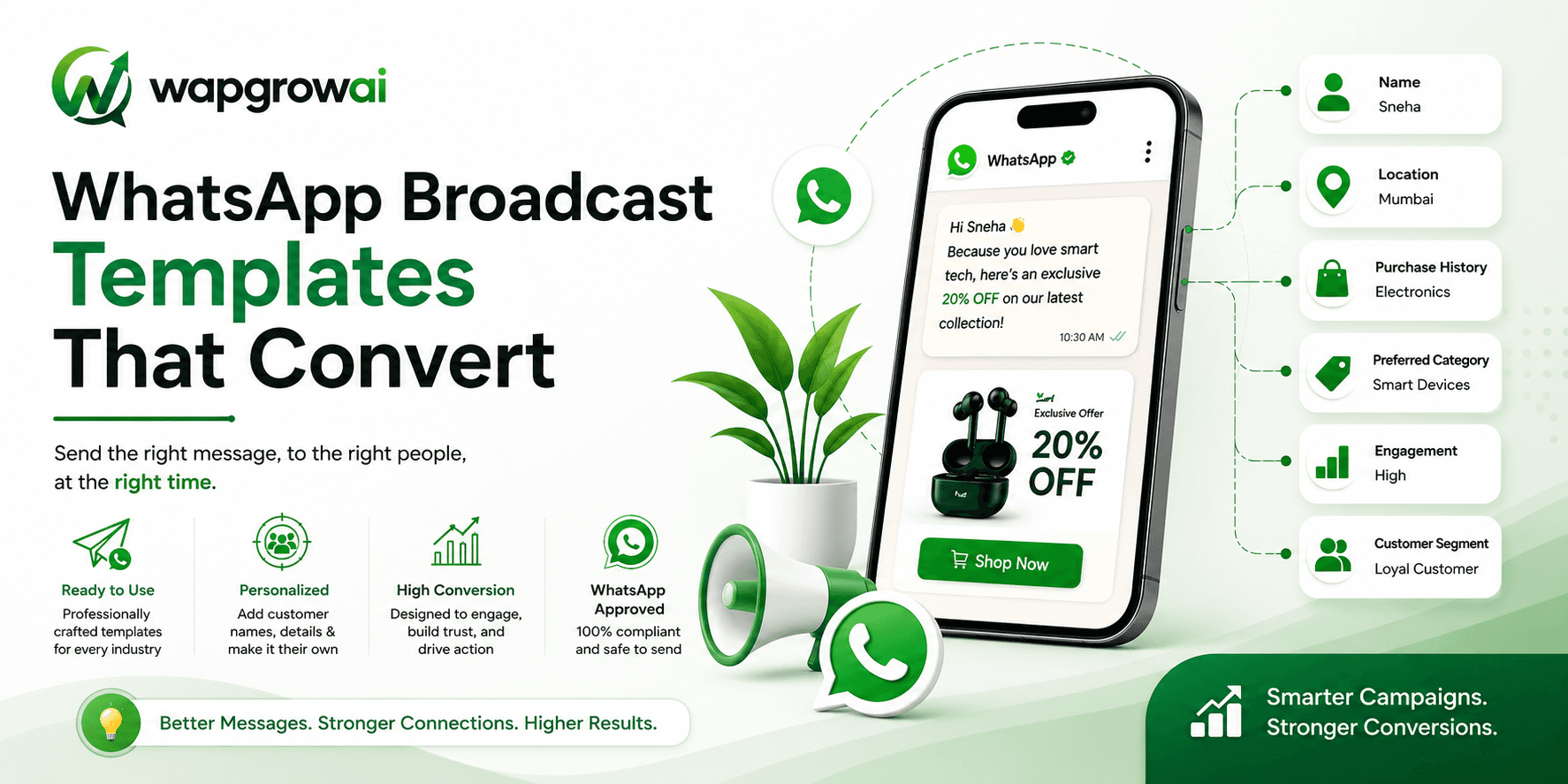
Any message you send to open a conversation must use a template Meta has approved in advance. This is not a formality — it is a review, it takes time, and it is where launch dates go to die.
Templates are approved per category, and the category you choose determines what you pay. Submitting a promotional message as 'utility' to save money does not work; it gets rejected, and repeated attempts affect how your later submissions are treated.
- Write templates in plain language. Reviewers reject aggressive marketing phrasing, all-caps, and anything resembling a scam.
- Get variables right first time. A template with the wrong number of placeholders has to be resubmitted, not edited.
- Submit a fortnight before you need them. Approval is usually fast, and 'usually' is not something to build a launch on.
- Maintain a small library and reuse it. Every new template is a new approval risk for no additional revenue.
Rate limits and tiers
Pricing is only half the constraint. The other half is how many people you are allowed to message at all.
New numbers start with a modest daily limit on business-initiated conversations. As you demonstrate that people do not block you, the limit rises through tiers. Behave badly and it drops again, quickly.
- You cannot buy your way up the tiers. Volume is earned through quality, not through spend.
- The rise is automatic, based on your quality rating and your recent sending history.
- A drop in quality rating can cut your limit overnight, in the middle of a campaign you have already planned around.
- Plan launches around your current tier, not your hoped-for one.
This catches out businesses that plan a large seasonal campaign, only to discover on the day that they cannot legally reach the audience they built the plan around. Check your tier before you commit to a number in a forecast.
Modelling the bill for a real business
A worked example, using round numbers rather than a specific market's rates, because the shape is what matters.
A retailer with ten thousand orders a month. Every order generates roughly three utility conversations — confirmation, dispatch, delivery. That is thirty thousand utility conversations, and they are not optional; they are the service the customer is expecting.
The same retailer runs two marketing broadcasts a month to a segment of eight thousand. That is sixteen thousand marketing conversations, at several times the utility rate.
And customers message in — questions, complaints, order chases. Say five thousand service conversations, which in many markets now cost nothing at all.
Look at that mix again: half the volume is utility, a third is marketing, and the marketing third is where most of the money goes. That ratio is where every optimisation lives.
Now change one thing. Move acquisition from broadcasts to click-to-WhatsApp ads. The marketing conversations fall, the free ad-initiated windows rise, and the total bill drops meaningfully — while reach stays flat, because the ads are reaching people the broadcasts were not going to convert anyway.
Questions to ask your provider
Not all platforms are transparent about this, and the differences show up on the invoice rather than in the sales deck.
- Do you charge a markup on Meta's conversation rates, and is it visible on the invoice?
- Do you automatically detect an open window and send inside it for free, or do you open a new billable conversation?
- Can I see spend broken out by category — marketing, utility, authentication, service — without exporting anything?
- Do you charge per contact stored, per seat, or per conversation? All three models exist and they suit very different businesses.
That second question is the one that separates platforms. A system that blindly opens a new conversation when a free window was already available is charging you for its own inattention — and at any real volume, the difference is not marginal.
Ask it before you sign, not after your first invoice.
The free window, used properly
Everything in this article ultimately reduces to one behaviour: get the customer to reply, then do your work inside the twenty-four hours that follow.
That window is the most valuable thing WhatsApp gives you, and most businesses treat it as a technicality rather than as the centre of their strategy. A customer who has replied to you is, for the next day, reachable at no cost, as many times as the conversation warrants.
- Design your first message to earn a reply, not a click. A question outperforms a link, and it costs the same to send.
- When somebody replies, do not close the conversation the moment their question is answered. Ask the follow-up. It is free.
- Schedule your follow-up sequence inside the window rather than as a new campaign three days later. Same messages, materially different bill.
- Track the share of your conversations that receive a reply. It is a better health metric than open rate and it directly predicts your cost.
Every business-initiated conversation is a purchase. Every customer-initiated one is a gift. Build the machine that produces gifts.
A quarterly review worth doing
Put ninety minutes in the calendar every quarter and answer five questions. It is the cheapest cost optimisation available to you.
- What proportion of our conversations were business-initiated? If it is rising, our costs are rising and our welcome is wearing thin.
- What proportion of marketing conversations converted? If a segment has never converted, we are paying to annoy it.
- How many contacts have received more than six broadcasts and never once replied? Those people should be suppressed, not re-targeted.
- How much did we spend on templates that a free window would have covered? This number is usually embarrassing the first time anybody computes it.
- Where is the quality rating trending? Not where is it — where is it going.
The teams that run this review find savings without sending less. The teams that do not run it discover the same problems eventually, in the form of a yellow quality rating and a bill nobody can explain — usually in the middle of the quarter where they can least afford either.
Three more,
worth your time
Ready togrow on WhatsApp?
Join 10,000+ businesses turning conversations into revenue.
Start free trialBook a demo