WhatsApp's Pricing Changed on October 1: What Businesses Pay For Now
Replies to customers now cost money after the first 1,000 a month. What changed, what didn't, and how to keep the bill predictable.
For most of the last year, answering a customer on WhatsApp cost nothing. A customer asked a question, your team replied, and Meta didn't charge for the reply. Since October 1, 2026, that's no longer entirely true.
The change is smaller than some headlines make it sound, and for many small businesses it costs nothing extra at all. But if your team or your chatbot sends a lot of replies, or you send order updates while a customer is chatting, it's worth knowing exactly what changed.
The short version
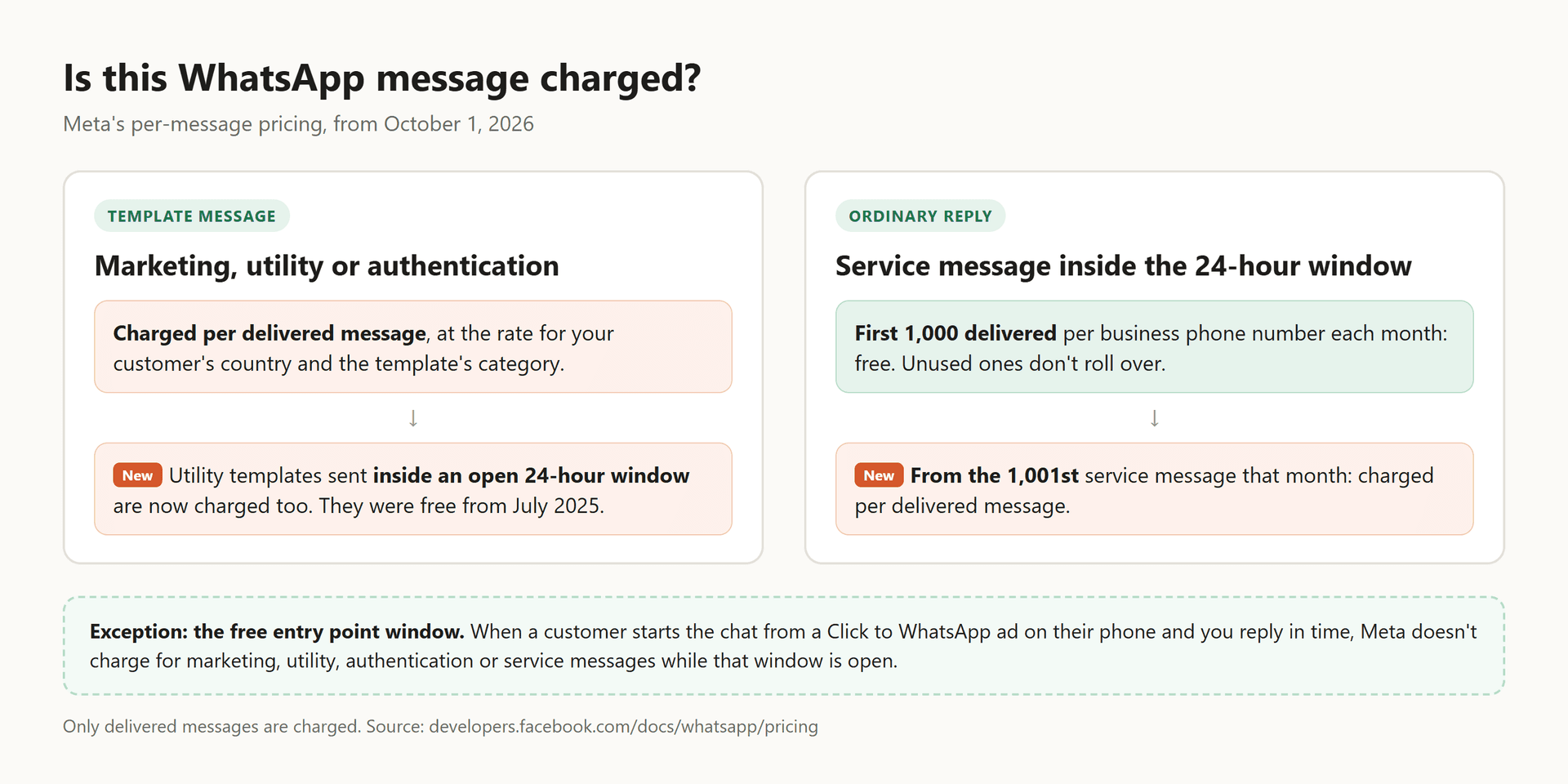
- Replies inside the 24-hour window are no longer always free. Each business phone number gets 1,000 free delivered replies a month. From the 1,001st, Meta charges for each one.
- Utility templates sent while a customer is chatting are now charged. Order updates, delivery notices and similar templates were free inside the window from July 2025. Now they're charged like any other utility template.
- Everything else works as before. Templates are still charged per delivered message, by category and by the customer's country. The 24-hour window rules haven't changed.
How WhatsApp pricing works, in one minute
Since July 1, 2025, Meta charges per message, and only for messages that are delivered. Two things decide the price of each one:
- The category. Messages you start with a pre-approved template fall into one of three categories: marketing (offers, announcements), utility (order confirmations, delivery updates, appointment reminders) and authentication (one-time passcodes). An ordinary reply typed inside the 24-hour window is a service message.
- The customer's country. Rates depend on the country code of the number you're messaging, not where your business is. Meta publishes them as rate cards on its pricing page.
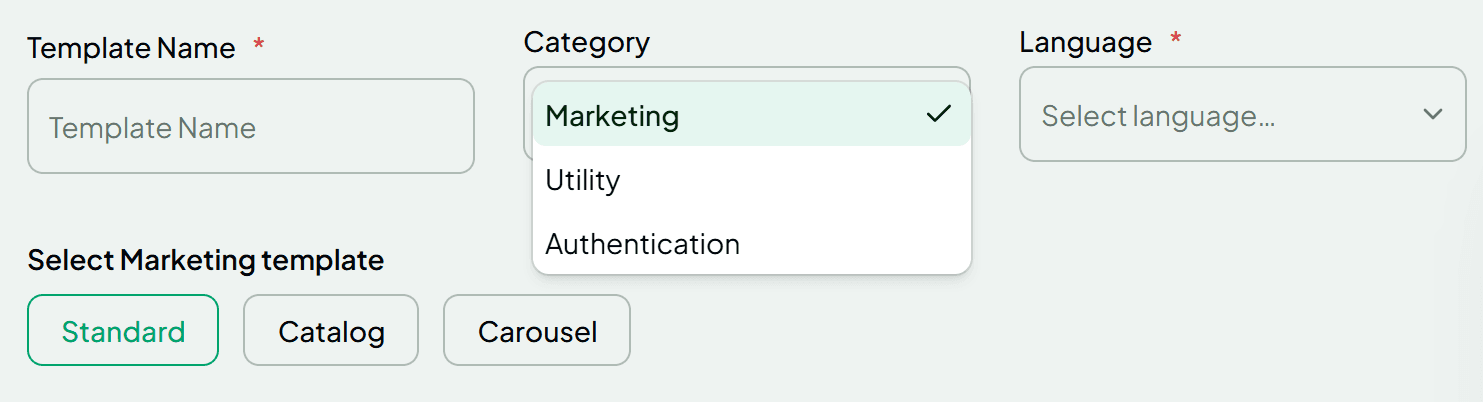
Choose the category honestly. Meta checks every template against its category guidelines and can recategorize it, including after approval, so a promotion dressed up as a “utility” update ends up charged as marketing anyway.
What changed on October 1, 2026
1. Service messages: 1,000 free a month, then charged
Meta's developer documentation puts it plainly: “Each business phone number has one free tier of 1,000 delivered service messages per month.” From the 1,001st service message in a month, each one is charged. Unused free messages don't carry over to the next month.
A few details matter:
- It's per phone number, not per business. Two numbers mean two allowances of 1,000.
- Every reply counts, whether a person typed it or a chatbot or AI agent sent it. Automation doesn't change the category.
- You need a payment method. Meta says that without one in its Billing Hub, it will deliver service messages within the free tier but not after the free tier has been used.
2. Utility templates inside the window are charged again
From July 2025, a utility template sent while the customer's 24-hour window was open (say, an order confirmation right after they ordered in the chat) was free. As of October 1, 2026, Meta charges for those as regular utility messages.
3. Some country rates moved
Meta's pricing updates page also lists rate changes in specific countries on the same day. If you message customers in several countries, check the current rate card rather than last year's numbers.
What didn't change
- The 24-hour window. When a customer messages or calls you, a 24-hour customer service window opens, and each new message or call from them resets it. Inside it, you can send ordinary replies. Outside it, only templates.
- Templates are still charged per delivered message. Rates still depend on the category and the customer's country, and utility and authentication messages get cheaper rates at higher monthly volumes.
- The free entry point window. When a customer starts a chat from a Click to WhatsApp ad on their phone, and you reply within the customer service window, Meta doesn't charge for marketing, utility, authentication or service messages while that free window is open. Meta's developer docs currently say it “may remain open for up to 7 days”; Meta's older marketing page still describes it as 72 hours.

What it means for a typical business
- A small shop replying to a few hundred chats a month stays inside the free 1,000 and pays nothing new for replies.
- A busy support team sending 5,000 replies a month from one number pays for about 4,000 of them.
- A store that sends order confirmations while the customer is still chatting now pays for each of those confirmations as a utility message.
- A business that mostly sends marketing campaigns sees little difference: marketing templates were already charged.
Five ways to keep the bill predictable
- Add a payment method before you need it. Otherwise replies stop being delivered once the free 1,000 are used up, which is a much worse problem than the bill.
- Answer in one complete message. Three short replies are three service messages. One clear answer is one.
- Watch your automation. A chatbot that sends a greeting, a menu and a confirmation for every enquiry uses three messages where one might do. Trim the steps that customers skip anyway.
- Pick template categories carefully. Use utility for genuine transaction updates, and don't send a utility template inside the window when an ordinary reply would do.
- Check what you're actually charged. Meta reports pricing per delivered message, including the category and whether it was charged, so your platform or WhatsApp Manager can show where the money goes before the invoice arrives.
Coming next: billing currency in India
If the sold-to country in your Meta Billing Hub is India and your WhatsApp messaging account bills in a currency other than Indian rupees, read Meta's pricing page now. Meta says “as of January 1, 2027 Meta will no longer deliver the messages of non-INR Messaging accounts of eligible customers”, and asks them to move to INR by December 31, 2026. A similar change for Brazil, to Brazilian reais, follows in July 2027.
Quick answers
Are failed messages charged?
No. Meta charges only for messages that are delivered.
Is the 1,000-message allowance per account or per number?
Per business phone number, per month. It resets each month and doesn't roll over.
Do chatbot and AI replies count?
Yes. A reply inside the 24-hour window is a service message, whoever or whatever sends it.
Can Meta change prices again soon?
Meta can change prices only on the first day of a quarter (January 1, April 1, July 1 or October 1) and must give notice, at least a month for rate changes. So the next date it can do so is January 1, 2027.
For the basics of what the WhatsApp Business Platform is, see WhatsApp Business App vs. WhatsApp Business Platform. For why fast replies matter even when they cost something, see You Don't Have a Lead Problem. You Have a Reply-Time Problem.
Sources
- Pricing on the WhatsApp Business Platform — Meta for Developers
- Updates to pricing — Meta for Developers
Three more,
worth your time
Ready togrow on WhatsApp?
Join 10,000+ businesses turning conversations into revenue.
Start free trialBook a demo